
Building on Coastal & Lakefront Sites: What to Know
Updated: May 12
There’s a reason some of the most compelling homes sit closest to the water.
Whether it’s the Mount coastline or a quiet lakefront edge, these sites offer incredible outlooks — but they also come with a level of complexity that needs to be understood early.
At Calley Homes, these are the sites we know well. Coastal hazard zones, flood-prone land, lakefront sensitivities — they’re all part of the process. The key is not working against them, but designing with them.
So what actually makes these sites different?
In simple terms — more rules, more variables, and more opportunity to get it right.
Along the coast, erosion zones and setbacks can shape where and how a home sits. Around lakes, it’s often about protecting the environment — with tighter controls on earthworks, vegetation, and visual impact.
Then there’s the technical layer:
Floor levels often need to be lifted
Ground conditions can require specialised foundations
Materials need to handle wind, salt, and exposure
All of it feeds into the design — not as a limitation, but as a way to refine it.
Designing with the site
The best homes on the water feel like they belong there.
They step with the land, respond to the elements, and frame the view without overworking it. Outdoor spaces are sheltered, materials are considered, and the architecture feels resolved from every angle.

An example of working within the constraints is Surfs Edge — a redevelopment within a coastal erosion zone, designed for potential deconstruction in response to future shoreline movement. Concrete tilt panel construction is paired with cedar board and batten cladding to achieve both resilience and coastal character.
Consents — what to expect
Most coastal and lakefront builds will require more than just a standard building consent.
Depending on the site, you may need resource consent — particularly if you’re working within hazard zones, modifying land, or building within sensitive environments.
It’s not unusual for additional reports and coordination to be required, so getting the right team involved early makes a big difference.
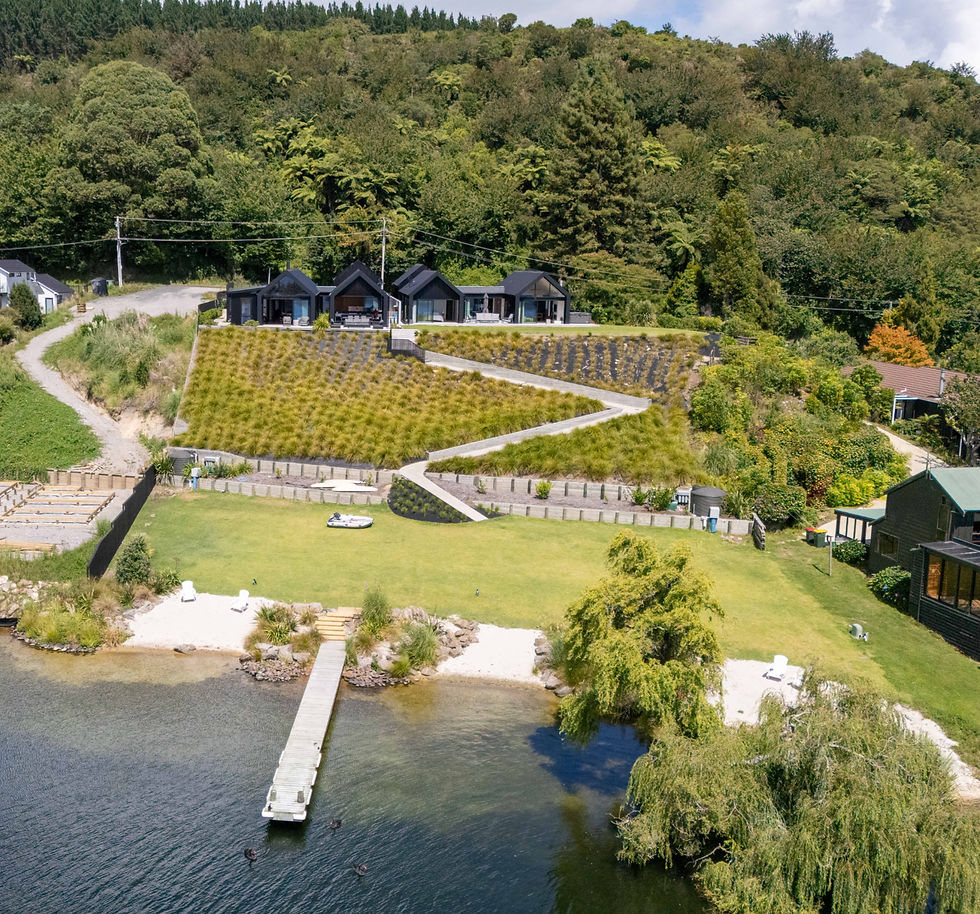
An example of this: A considered response to a highly complex site - the Lakehouse at Ōkawa Bay — shaped by a detailed consent process involving land recontouring, slope retention, and lake edge restoration, including approval for a new jetty and boat shed. Delivered in close collaboration with council and iwi, the result is a home that sits carefully within its environment.
Why experience matters
These aren’t standard builds. They require careful planning, strong collaboration, and a clear understanding of how to navigate both the site and the council process — all while protecting the design intent. That’s where experience counts.
At Calley Homes, we’re used to working in this space — delivering homes that not only meet the constraints of the site, but elevate them.
Considering building at the beach or the lake?
The opportunity in these sites is huge — if you approach them the right way.
If you’re looking at a coastal or lakefront section, we’re always happy to talk through what’s possible.
Frequently asked questions Coastal & Lakefront Building
Can you build a house in a coastal erosion zone in New Zealand?
Yes — but it depends on the site and local council rules. Coastal erosion zones often require setbacks from the shoreline and may influence where and how a home is positioned. In many cases, homes are designed to be adaptable or even deconstructable over time, responding to potential future shoreline movement.
Do you need resource consent to build near the coast or a lake?
Often, yes. Resource consent is typically required if your site sits within a coastal hazard zone, lake setback area, or sensitive environmental overlay. It may also be triggered by earthworks, retaining, or design elements that fall outside standard planning rules.
What reports are needed for building near the water?
Most projects will require a combination of reports, including geotechnical investigations, flood or hazard assessments, stormwater design, and sometimes landscape or visual impact assessments. These support both resource and building consent applications.
How long does the consent process take for coastal or lakefront homes?
It varies depending on the complexity of the site and the number of approvals required. Projects involving multiple stakeholders — such as councils and iwi — can take longer, so early planning and the right team are essential.
Is it more expensive to build near the water?
Typically, yes. Additional costs can come from site preparation, specialised foundations, consenting requirements, and more durable material selections. However, these investments are essential to ensure long-term performance and resilience.
What materials are best for coastal homes?
Durability is key. Materials are selected to handle salt air, high winds, and UV exposure. This often includes treated timber, corrosion-resistant metals, and cladding systems designed to weather naturally while requiring minimal maintenance.
Why is it important to work with an experienced builder on these sites?
Coastal and lakefront builds require a high level of coordination between architects, engineers, planners, and councils. An experienced builder helps navigate this process, manage risk, and ensure the design intent is delivered without compromise.


